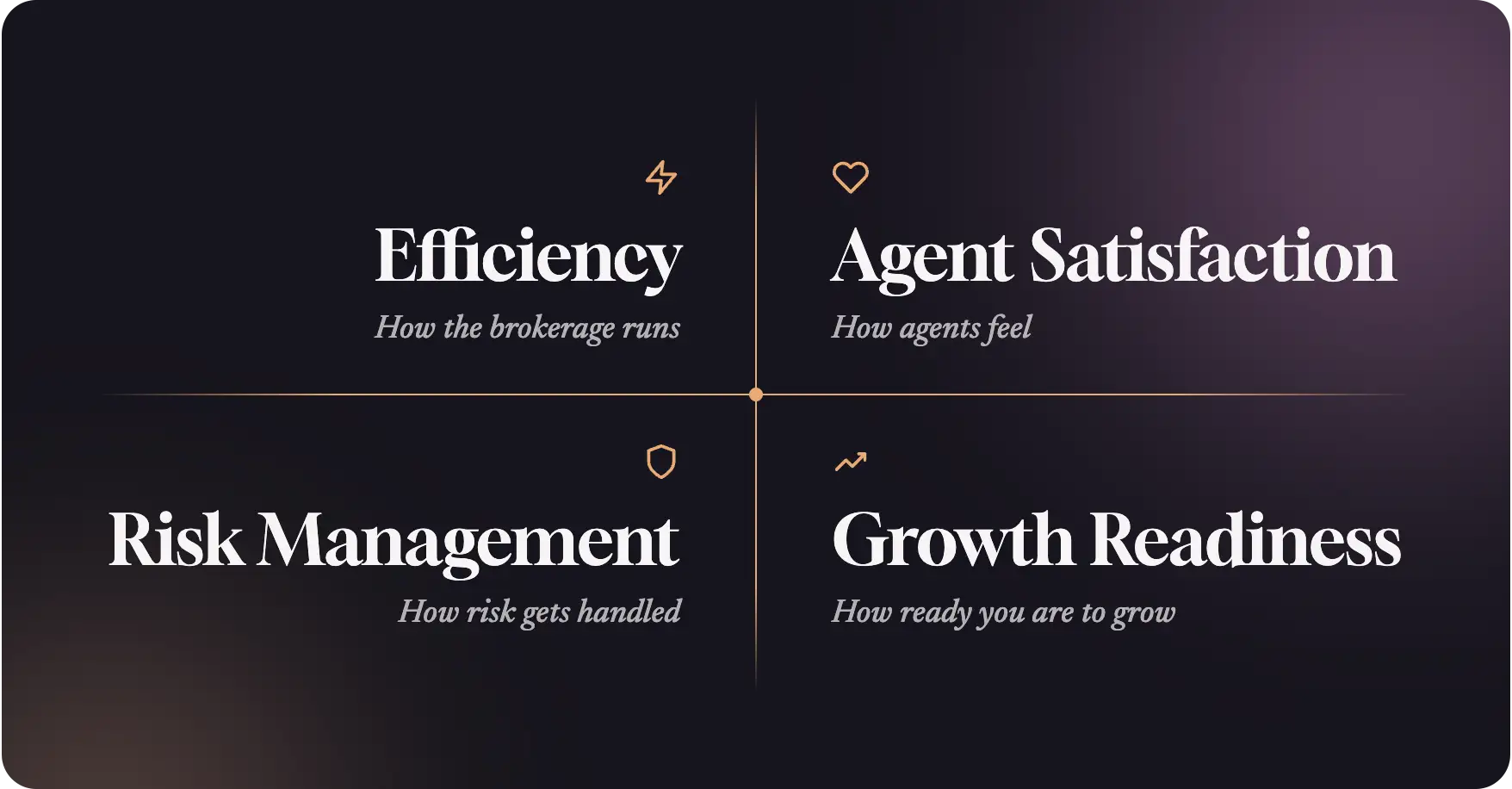
TL;DR – Most brokerage operations were never really designed, they just accumulated over the years. Side built its own on purpose, around the four things that decide how a brokerage actually runs, and designed for all four at once instead of trading one for another.
- Efficiency – More than 6 hours given back to every agent on every transaction.
- Agent satisfaction – A 95% rating that any owner will read as a retention number.
- Risk management – Every file reviewed, so audit-readiness is a state you stay in, not a project you brace for.
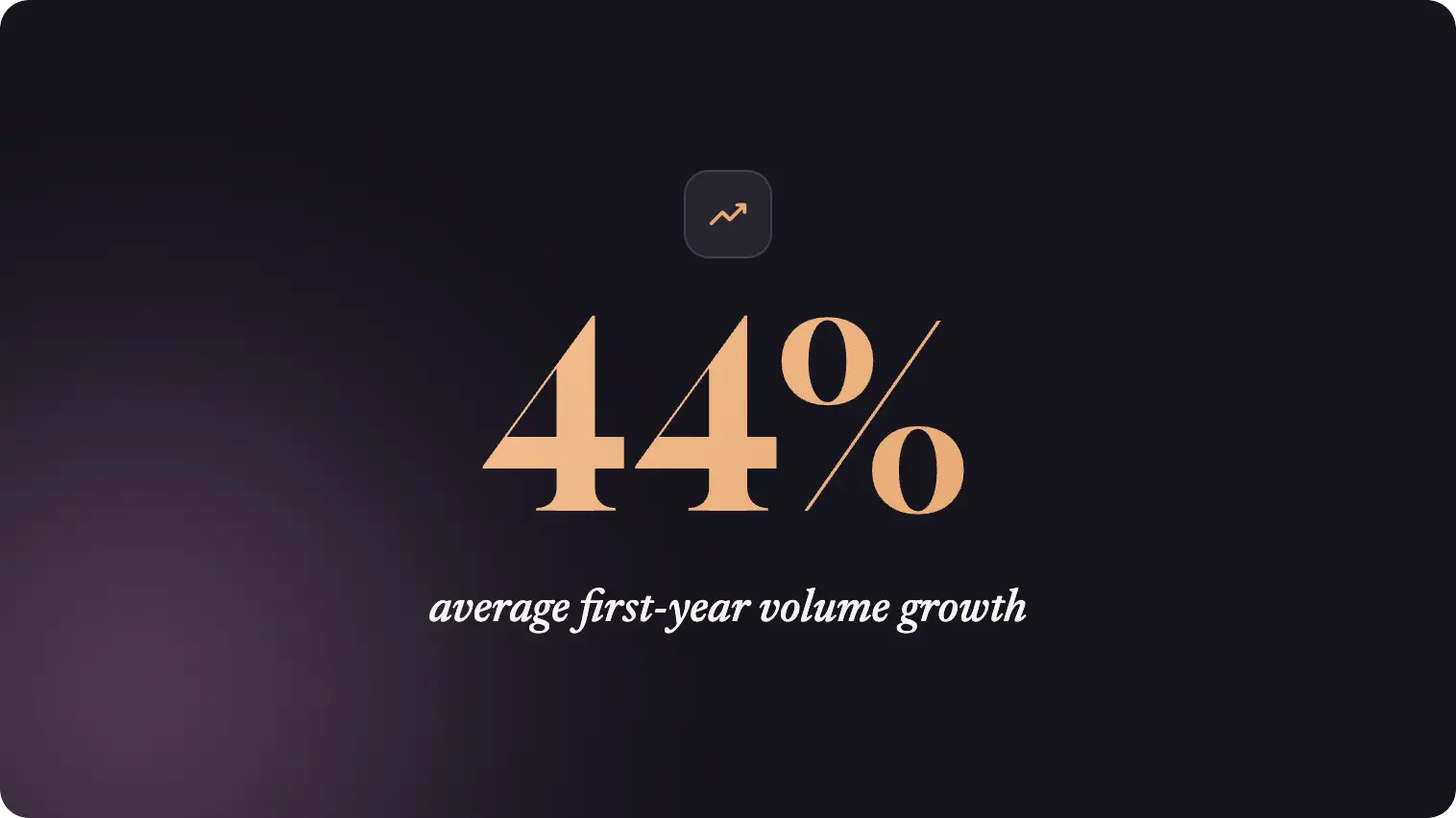
- Growth readiness – 44% average first-year volume growth, without the overhead that usually comes with it.
Most brokerage operations are built piecemeal over time rather than intentionally designed from scratch. As issues arise, teams add new tools and quick fixes, relying on the instincts and experience of long-time employees. While this approach helps close deals, it often results in operations that barely get by week to week.
Side started from a different place. The platform runs the back office for more than 600 real estate companies, close to 30,000 transactions a year, the volume of a Top 10 brokerage, and at that scale a quick fix that works for one office breaks for the other 599. So it began with the question most owners never have time to ask: what should an operation actually produce, month after month? The answer was four things at once: an operation that runs efficiently, agents who feel taken care of, risk handled before it becomes a problem, and a business that can add agents and markets without adding strain.
Last month the Broker Owner Brief asked owners which part of their operation they most wanted to improve. Efficiency came out on top, and it wasn’t close. That instinct makes sense, because efficiency touches every other part of the business. On its own, though, it only goes so far. Chased the usual way, with fewer people and thinner support, it leaves a business lean enough to save money but too lean to do much else. Better results come when you design efficiency as part of the whole, alongside agent satisfaction, risk, and growth. Built that way, it works the other way around, giving your agents a better experience and your business real room to grow without ever draining the bottom line to get there.
Even if one area is pinching right now, fixing it at the expense of the other three only moves the problem. Here is how Side designed for all four together, and what each one produced.
Efficiency is everything it takes to move a file from contract to close, from everyone who touches it to every system it passes through and the rework when it comes back around. Most of that cost is invisible because it’s spread across a dozen small waits and the same work done twice, which is why owners feel it before they can measure it.
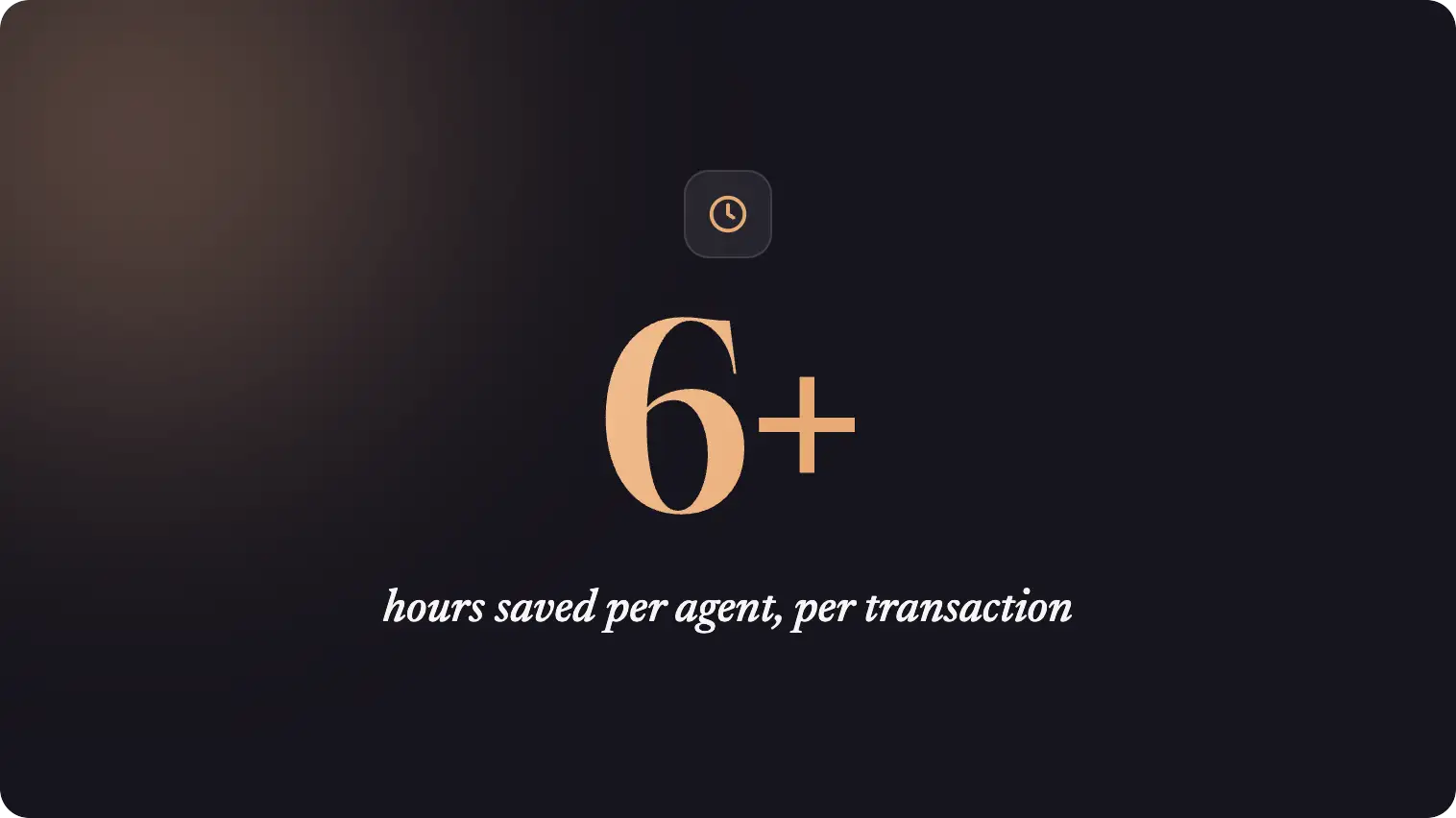
Side designed for efficiency by shrinking that list. One operation runs the transaction from origination to payment, so nobody re-keys a file between systems. Documents are auto-tagged as they land, so the checking happens while the file moves. Accounting and reporting are live in the app, so the numbers are there when you want them. The technology behind all of it is Side’s own, built for this operation and protected by 14 U.S. patents. All of it adds up to more than six hours saved per agent on every transaction, hours that come back to the people running your brokerage.
For an agent, satisfaction comes down to one thing: how easy the day-to-day actually is. That means how much work it takes to close a deal, how quickly they get paid, how fast someone answers when they’re stuck, and whether the tools help or just add to the pile. That experience is what decides whether they stay. The best agents move to the brokerages where the work is lighter and the pay lands faster. When a brokerage can’t offer that, they tend to leave quietly, and recruiting gets harder without anyone quite knowing why.
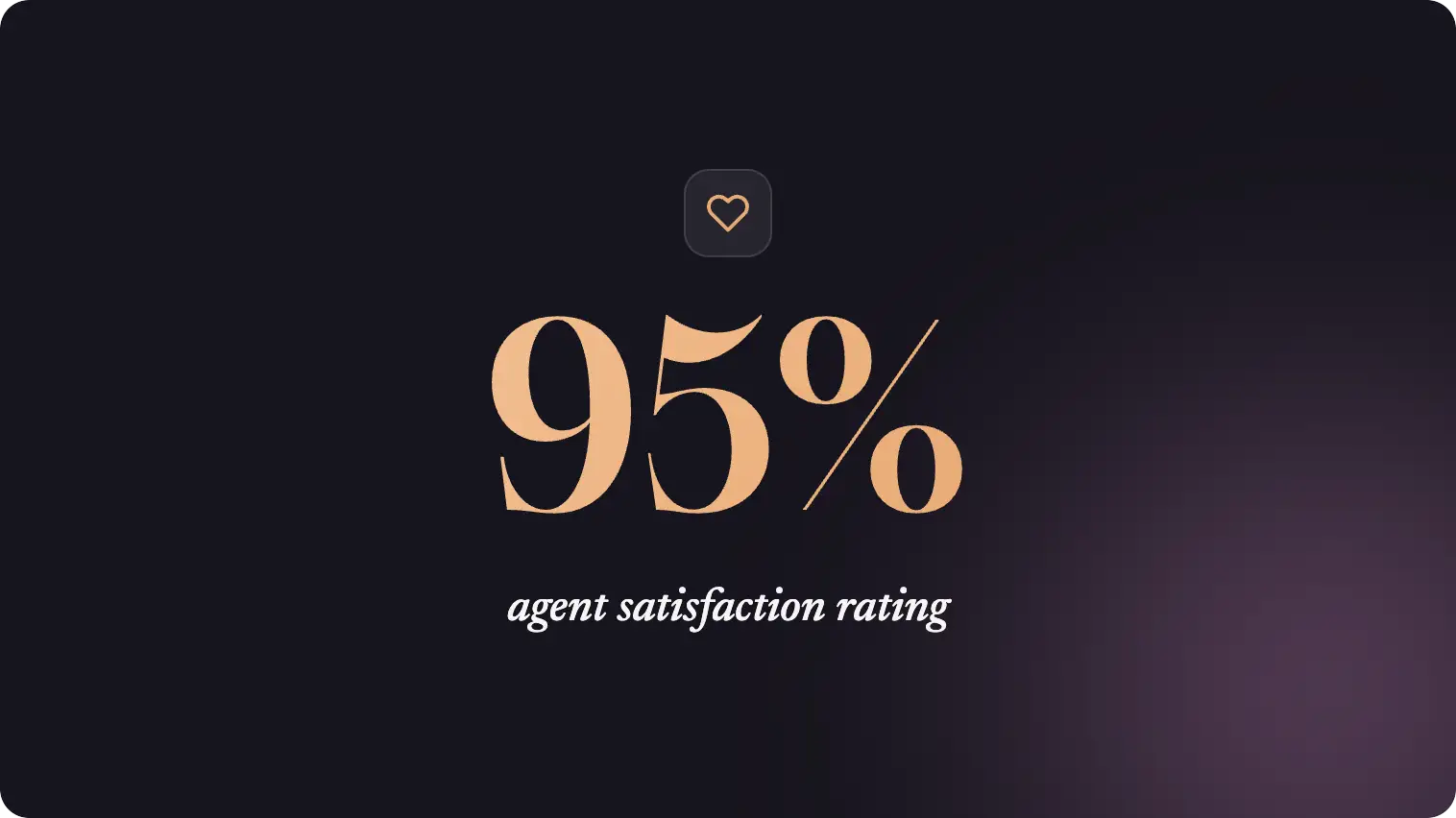
Side built the operation around the agent’s experience, not the back office’s convenience. Getting started is effortless, the entire brokerage lives in a single app, help is only minutes away seven days a week, and commissions arrive the day a deal closes. The result is a 95% agent satisfaction rating, the kind of number that keeps your best people and makes your next great hire that much easier to win.
Risk is really a question of how exposed your brokerage is at any given moment, and for most owners the honest answer is that it “depends on when you ask”. A missing document, a compliance step handled after the fact, or an audit you’re not ready for can all sit quietly in the background, costing you nothing at all. Then one of them surfaces at the worst possible time, and the gap you never noticed becomes the only thing that matters.
Side designed for risk management by putting the review inside the workflow instead of after it. Every document is tagged the moment it lands, down to the signatures, initials, and dates, so a missing one stands out while there’s still time to fix it. A compliance team reviews every file, not a sample and not only the risky-looking ones, and every task is auto-logged and accessible in real time. Audit-readiness is a state the operation stays in, rather than a project you brace for. For an owner, that’s the difference between finding out in an audit and finding out in time to act.
Almost every owner wants to grow. Some grow organically, some by acquisition, and some by saying yes to an opportunity that was too good to pass up, even when they weren’t looking. Growth readiness is what determines whether the business can actually handle getting bigger, and it starts with a few honest questions. Does adding agents add profit, or just headcount? Does opening a market build momentum, or just drag? And how much of your own week goes to running the business instead of growing it? For most brokerages, growth has always come with a catch, because every new agent and every new market adds cost about as fast as it adds revenue, so standing still can start to feel safer than pushing ahead.
Side designed for growth by building a platform that absorbs the work instead of turning it into overhead. Onboarding runs the same for the fiftieth agent as it did for the fifth. A new market opens on the operation you already have, not one you have to build. The platform was built to handle ten times today’s transactions overnight, so 600 companies is the floor, not the ceiling. The work that used to land on your desk simply gets done, so your calendar gets lighter as the company gets bigger. Best of all, cost never runs ahead of revenue. Companies that switch to Side grow their volume by 44% on average in their first year. Getting bigger finally feels like winning again.
When all four pillars work together, they give you not just a cleaner back office but the freedom to get back to the parts of the business you love most. The operation moves the files, pays the agents, and keeps the brokerage audit-ready, none of it waiting on you. Your week finally opens up. You can spend it on the work only you can do, whether that’s making the recruiting call you’ve been putting off, opening the market you’ve circled for a year, or chasing a vision your operation could never keep up with before. In the end, an operation designed on purpose lets you run your business instead of your back office.
The best place to begin is knowing where your own operation stands across all four pillars. That is exactly what the Brokerage Ops Score is built for. In thirteen questions and a few minutes, it gives you a clear read on where you’re strong, where you’re exposed, and where to focus first. And if you have no idea where to start, you’re not on your own, because everything behind the score comes from Side’s years of running the operations of 600 companies. If your results raise questions, bring them to us, and we’ll show you what all of this could look like built around your brokerage.
A 13-question self-assessment across the same four pillars. It takes a few minutes and ends with your score and where you stand.